





Written by:
Last Updated:
July 9th, 2026
Group Therapy in Rehab at Bayberry
Many people arrive at residential rehab carrying the belief that what they have been through is uniquely theirs. Shame, secrecy and isolation are among the most common experiences in addiction and mental health difficulties, and they can make it feel as though no one else would truly understand. Group therapy can challenge that belief directly. In a professionally facilitated space, people find they are able to hear, speak, reflect and be understood in ways that can shift something important in how they see their own situation.
At Bayberry, group therapy is a central part of the structured Cottages programme, where it sits alongside one-to-one therapy sessions and wider residential support. Bayberry Manor is entirely one-to-one and does not include group therapy. The admissions team can help clarify which programme is likely to be the better fit.
What Is Group Therapy in Rehab?
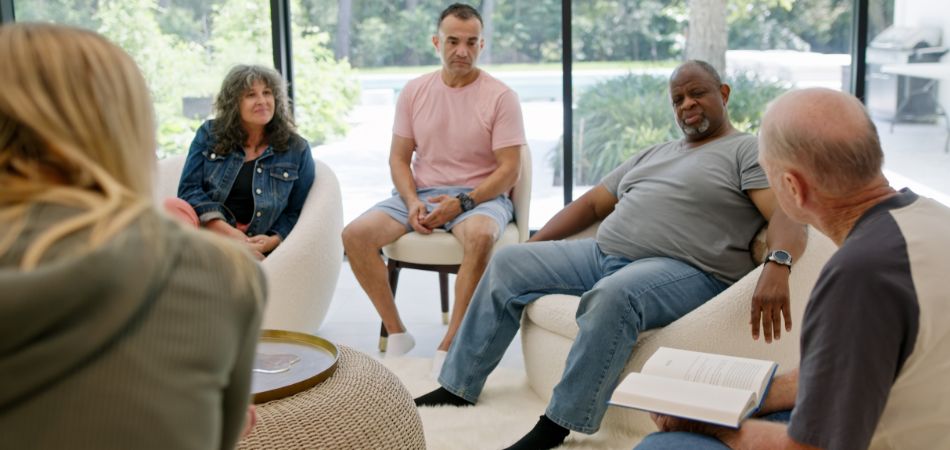
Group therapy in a residential rehab setting is a professionally facilitated therapeutic session. A small number of clients come together, led by a qualified therapist, to work on themes connected to addiction, mental health, emotional patterns, relationships, relapse prevention and recovery. It is structured, purposeful work.
It is worth being clear about what group therapy is not. It is not an informal discussion, a public confession, or a setting where people are expected to disclose everything at once. Participation is guided and supported throughout, and clients retain control over what they share and at what pace. A skilled therapist creates the conditions for genuine reflection and connection, without anyone feeling coerced or exposed beyond their readiness.
Sessions may incorporate reflection, guided discussion, therapeutic exercises, emotional regulation work, recovery-focused themes, communication skills, shared learning and relapse prevention planning. The content is shaped by where the group is in treatment and what the people in the room need.

Your Addiction-free future
starts with one phone call.
Why Group Therapy Can Be Powerful in Recovery
The particular value of group therapy in addiction and mental health recovery is connected to something specific about those experiences. Shame, secrecy and the feeling of being uniquely broken are not incidental to addiction. For many people, they are central to it. Group therapy addresses these directly, not by discussing them in the abstract, but by creating the conditions where people can hear their own experience reflected back by someone else in the room.
When someone describes a thought, a pattern or a moment that felt private and shameful, and others in the group recognise it, something shifts. The sense of unique defectiveness that shame produces begins to weaken. That is not something that can be fully replicated in individual therapy, however skilled the therapist. It requires other people.
Group therapy can also support recovery in practical ways. Being part of a small group builds accountability. Witnessing other people’s progress provides perspective. Learning to communicate honestly in a relational setting builds skills that matter enormously after treatment ends. Research consistently points to peer connection and community as among the strongest factors in sustained recovery, and group therapy is one of the main ways that community is built during a residential stay.
That said, group therapy is not the right approach for everyone. Its value depends on the individual, their needs, their circumstances and where they are in their recovery. That is part of why the admissions conversation matters.
What Group Therapy Can Help With
Group therapy supports a wide range of challenges connected to addiction and mental health. It works by combining shared experience with structured therapeutic input, helping individuals recognise patterns, build insight and practise healthier ways of relating to others.
Group therapy is not suitable for every presentation on its own and is always delivered as part of a wider, individualised treatment programme rather than a standalone intervention.
Reach out today for addiction rehab guidance
Our admissions team will guide you towards the right addiction treatment programme and answer all your questions, completely free of charge and with no obligation.
Group Therapy at Bayberry Cottages
At Bayberry Cottages, group therapy forms part of a premium structured programme that combines group work with individual therapeutic support. The Cottages are arranged around a courtyard garden, with no more than two clients sharing each cottage, which keeps the environment small and genuinely residential rather than institutional.
Weekday group sessions follow a structured timetable and are professionally facilitated by qualified therapists. Alongside the group programme, each client receives three one-to-one therapy sessions per week, as well as one fitness or planning session. Creative therapy is also incorporated where appropriate. Structured group work, individual sessions and creative elements together provide a more complete therapeutic experience than any single format could offer.
Beyond the formal programme, the Cottages environment supports the wider therapeutic community. The daily coffee house, open each afternoon for drinks, snacks and conversation, is part of that. So are local walks and social time with peers. Recovery does not only happen in the therapy room, and the environment is designed to reflect that.
Bayberry Cottages clients also have access to five years of free aftercare following successful completion of their programme, including twice-weekly live online group sessions led by Bayberry’s support team.
Group Therapy and One-to-One Support
Group therapy is not a replacement for individual therapy, and Bayberry does not treat it as one. At Bayberry Cottages, group sessions sit alongside three one-to-one therapy sessions per week. The two approaches serve different purposes and complement each other.
Individual therapy offers depth, privacy and a consistent therapeutic relationship. It is where more sensitive personal history, trauma and complex emotional material can be explored at a pace that suits the individual. Group therapy offers the peer dimension: shared experience, interpersonal reflection and the accountability that comes from being genuinely known by others who are working through similar challenges.
Some material may be worked through in individual sessions before a person is ready to explore it in a group context. Others may find that something raised in a group session opens up new territory in one-to-one work. The two approaches feed into each other throughout the residential stay.
Is Group Therapy Always the Right Option?
Group therapy is a well-established and effective part of many addiction and mental health treatment programmes, but it is not the right option for everyone at every stage of recovery. Its value lies in shared experience, structured discussion and interpersonal learning, but that same environment may not suit every individual need.
There are situations where group therapy may not be the most appropriate starting point. Some people require a higher level of privacy in order to feel safe enough to engage in treatment, particularly at the beginning of their recovery journey. Others may benefit more from a fully individualised approach due to the complexity of their clinical presentation, or because they need a lower-stimulation environment before introducing any form of group work.

For individuals who find group settings overwhelming or difficult to engage with, one-to-one therapy can provide a more contained and focused space to begin addressing underlying issues. This allows therapeutic work to progress at a pace that feels manageable, without the additional pressure of a shared setting.
At Bayberry Manor, both group-based and one-to-one pathways are available depending on clinical need. The one-to-one residential programme offers the same standard of therapeutic care without a group component, ensuring that treatment remains tailored to the individual rather than the format.
The admissions team will always explore these considerations in advance, helping to ensure that each person is placed in a programme that best supports their needs, comfort and stage of recovery.
How Group Work Supports Life After Treatment
One of the less obvious benefits of group therapy is that it builds skills and capacities that are directly relevant to recovery outside of treatment. The ability to speak honestly in a relational setting, to listen without becoming defensive, to receive feedback without shutting down and to trust others gradually are not just therapeutic goals. They are practical capacities that shape how well someone navigates early recovery.
Participating in group therapy during a residential stay also helps people practise recognising shared patterns in others, which often makes it easier to spot those same patterns in themselves when they resurface after discharge. The experience of not being alone in a struggle, learned in the group, can continue to matter long after the residential period ends.
For Bayberry Cottages clients, group connection continues beyond the residential stay through the five-year aftercare programme, which includes twice-weekly live online group sessions. The community built during treatment does not have to end at discharge.
How to Take the Next Step
Group therapy is one of the most effective formats available in residential addiction treatment, but whether it is the right approach depends on the individual. Our admissions team is available seven days a week to talk through the situation honestly, explain what each programme involves and help identify which option is likely to be the best fit. Don’t hesitate to contact us.
Ready to explore addiction rehab options? Let's talk it through.
We take the time to explain the full range of addiction treatment options available, so you can make informed decisions that feel right for you.
📞
Call us nowFree & confidential
✉️
Send an enquiryWe reply within hours
📋
Contact UsTakes 2 minutes
🔒 All enquiries strictly confidential


